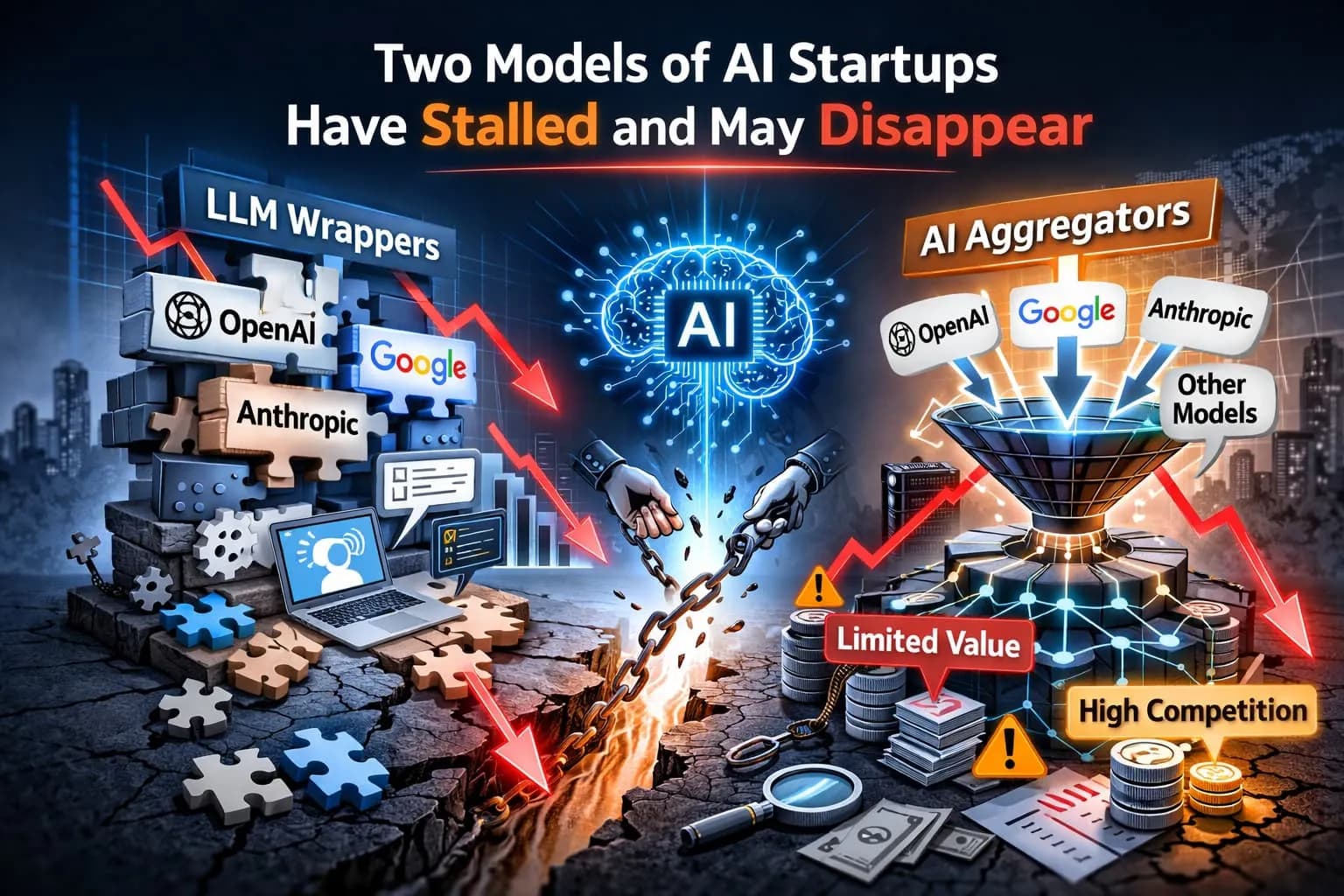
The growth of two models of artificial intelligence startups has stalled and may eventually disappear.
The rapid growth of generative AI over the past two years brought a wave of new startups into the market; however, as the initial hype has cooled, two business models have come under increasing scrutiny: LLM wrappers and AI aggregators. Daren Mowry, a senior executive at Google, warns that many of these companies face serious challenges on their growth path.
LLM wrappers are essentially startups that combine large language models from major companies such as Anthropic, OpenAI, and Google with a product layer or user experience to solve a specific problem. For example, a startup that uses AI to help students in their study process.
According to Mowry, startups that merely build a product layer or user experience on top of large models no longer have the same appeal for the market and investors. The Google executive emphasizes that the survival of this category depends on building “deep moats.” LLM wrappers such as Cursor in coding and Harvey AI in legal services have achieved more stable positions due to the development of strong intellectual property.
AI aggregators, which bring multiple language models together within a single interface or API, are also facing increasing pressure. Platforms such as Perplexity and OpenRouter have created added value by offering monitoring tools and have found success. Mowry advises new startups not to enter the aggregator business anymore.
From Mowry’s perspective, users are looking for a product that intelligently selects the best model based on their needs, not a service that switches between models merely due to access or computational limitations. The expansion of enterprise capabilities by primary model providers has also reduced the margins of intermediaries.
Referring to his experience at Amazon Web Services and Microsoft, Mowry compares the current situation to the early years of cloud computing expansion, a period when only companies offering specialized services such as security and migration survived.